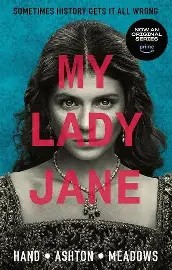
414 pages – YA Historical Fiction/Romance – Standalone
3 minute review read
Why I picked up this book
My copy of this book is a library book, but I certainly plan on getting my own one! I was aware of the TV series, but not that there was a book – I found it while browsing the Young Adult section of the best library in my area, and I certainly found the blurb intriguing… I was also in need of a lighter, easier read, as I was then tackling The Last Hours series by Cassandra Clare, and although I absolutely loved it, its not exactly the most relaxing.
In short, it looked fun and easy, and it’s brilliant to imagine a better ending for one of history’s many used women who met a sad end in real life.
The Book
This alternative history follows Lady Jane Grey and her husband, Gifford Dudley (please call him G!). It’s very light-hearted, and I love that a lot of the changes they made really helped make it so fun. There is all the conflict, double-crossing and allegiances of the Protestant v. Catholic tension at the time, but instead of religious conflict, its people-who-can-turn-into-animals-and-their-supporters v. people-who-think-that-turning-into-animals-is-a-crime.
I’ll expand on the lore and alternate world a bit now, basically, some people can turn into animals at will, or sometimes involuntarily. They’ve been long prosecuted as deviations from the natural order. However, King Henry the VIII suddenly starts turning into a lion when he’s mad, so being a person who can turn into an animal is suddenly legal and encouraged – though of course they are still very distrusted in regular communities.
Yet, despite this, the book is a fun romp through what should, by most reason, be quite sad at times. The writing voices of these three women come together seamlessly – I couldn’t tell what was written by who to any extent, and the voice was amazingly fun and enjoyable to read. The humour running throughout was nothing short of brilliant, and created great juxtaposition with the few moments of despair or hopelessness that are needed in any book with coherent plot and stakes, especially in this time.
I also think this book is wonderfully self-aware in it’s deviations from history and the odd modern phrase or mannerism that crept in was perfectly acknowledged and made into a joke. The book is split in two parts ‘Part One, where we revise some history’ and ‘Part Two, where history is thrown out the window’ (or some words to that effect). And the clownish irreverence of instances like this throughout the book was charming and right up my brand of humour.
So, in short, I don’t recommend this book for a stunningly complex plot, or gut-wrenching beautiful emotiveness found in other books, but just for a book that paints a good picture of Tudor England through the eyes of three young protagonists who see the irony and humour in their dark time. Who get up to some interesting escapades and continue making us laugh from start to finish. Who, it feels to me, now get to be more than a personality-less footnote of history.
I don’t think this book is meant to be taken very seriously, and just treated for what it is – amazingly funny and fun, and a version of history I would have much preferred.
Leave a Reply